What a concrete contractor in London, Ontario actually does
Looking for a concrete contractor in London, Ontario who shows up, explains the job clearly, and stands behind the pour? London Concrete Forming has completed 500+ residential concrete projects across the region over 20+ years of combined experience.
A concrete contractor in London, Ontario handles more than pouring a slab. The job starts before any truck arrives on site, and it does not end until the concrete has cured and the site is cleaned up. Homeowners searching for a concrete contractor London Ontario company are usually comparing driveways, patios, or a retaining wall, but the underlying process is the same: assess the site, prepare the ground properly for London's clay soils and frost line, form and reinforce the concrete correctly, and finish it in a way that holds up to Ontario winters.
How London Concrete Forming works, step by step
We keep the process the same on every job so homeowners know what to expect. Here is the order things happen in.
- Free on-site estimate: we visit the property, measure the area, discuss finishes and colours, and provide a firm quote within 1 business day. Estimates are typically scheduled within 2-5 business days of your call.
- Permits and grading review: for retaining walls over 600mm and for garage pads, we check City of London permit requirements before work starts. We also check drainage grading so water moves away from your home and neighbouring lots, not toward the Thames River watershed or a neighbour's yard.
- Excavation: old material or sod is removed to the correct depth, and the subgrade is checked. London's soil is predominantly clay, which holds water and heaves when it freezes, so excavation depth and a compacted granular base matter more here than in sandier regions.
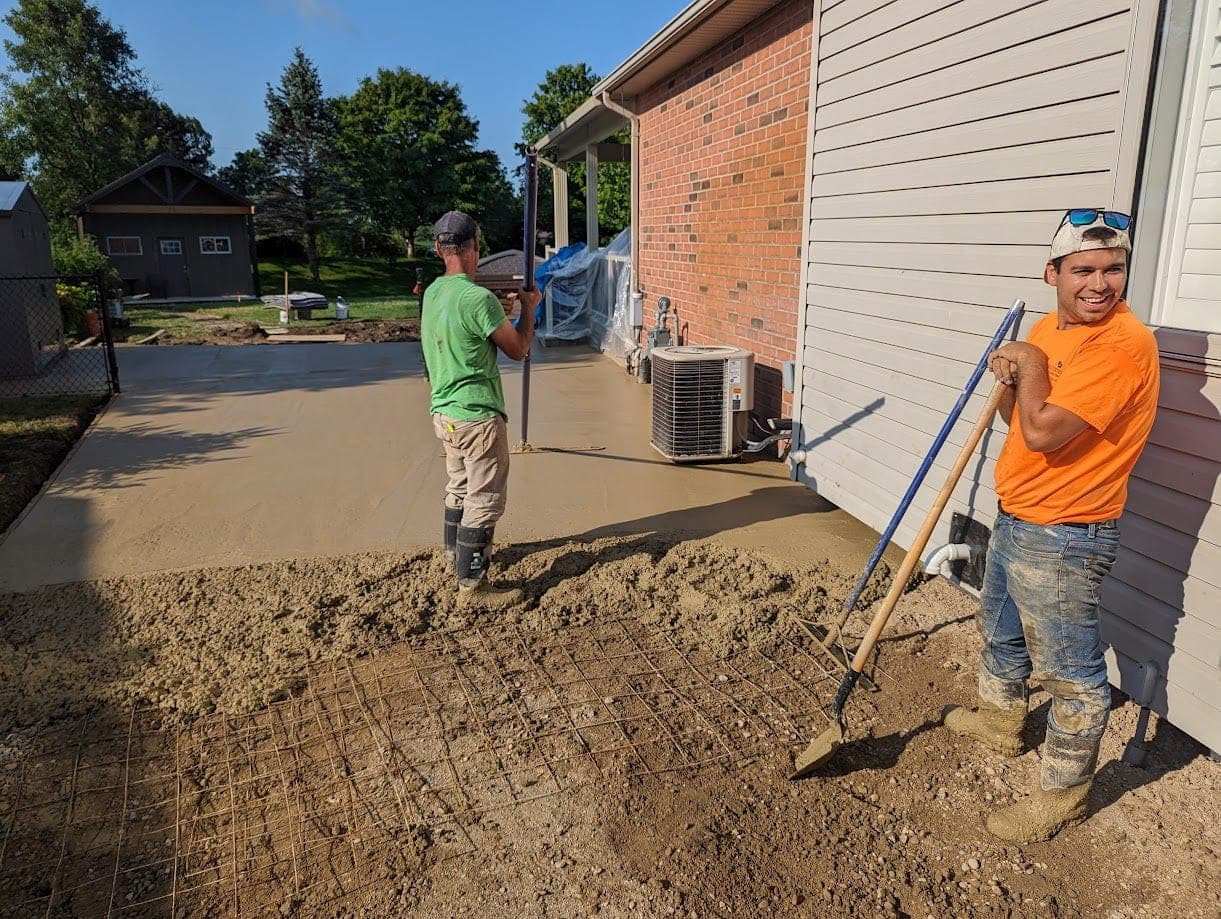
- Forming: wood or metal forms are set to the exact dimensions and slope of the finished project, with control joints planned to manage cracking.
- Reinforcement: rebar or wire mesh is placed depending on the application - driveways and pads generally get wire mesh or rebar, while retaining walls need engineered rebar schedules tied to the footing.
- Pour and finish: concrete is poured, screeded level, and finished in your chosen style - broom, exposed aggregate, smooth trowel, stamped, or coloured. See concrete finishes for a full comparison of finish types.
- Cure: concrete reaches walking strength in 24-48 hours, handles light vehicle traffic after about 7 days, and reaches full design strength around 28 days. We ask homeowners to keep vehicles off a new driveway for the full 7-day window.
Services we provide across London and area
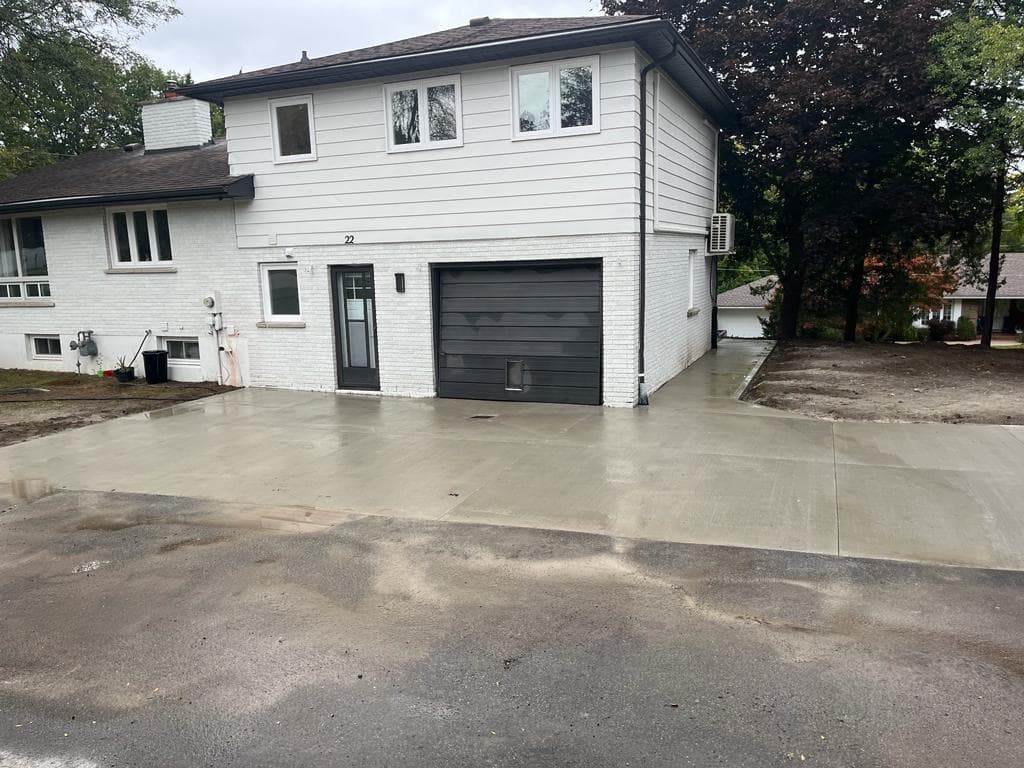
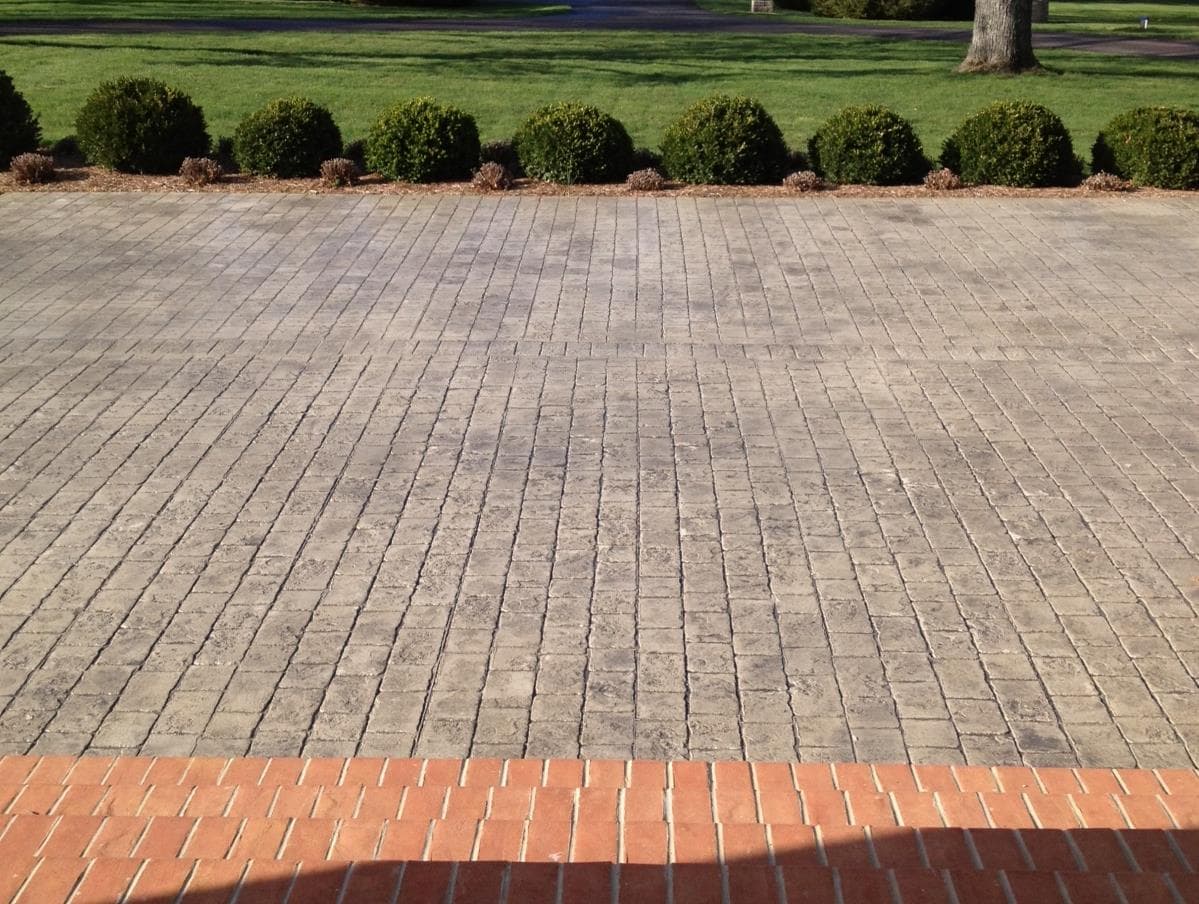
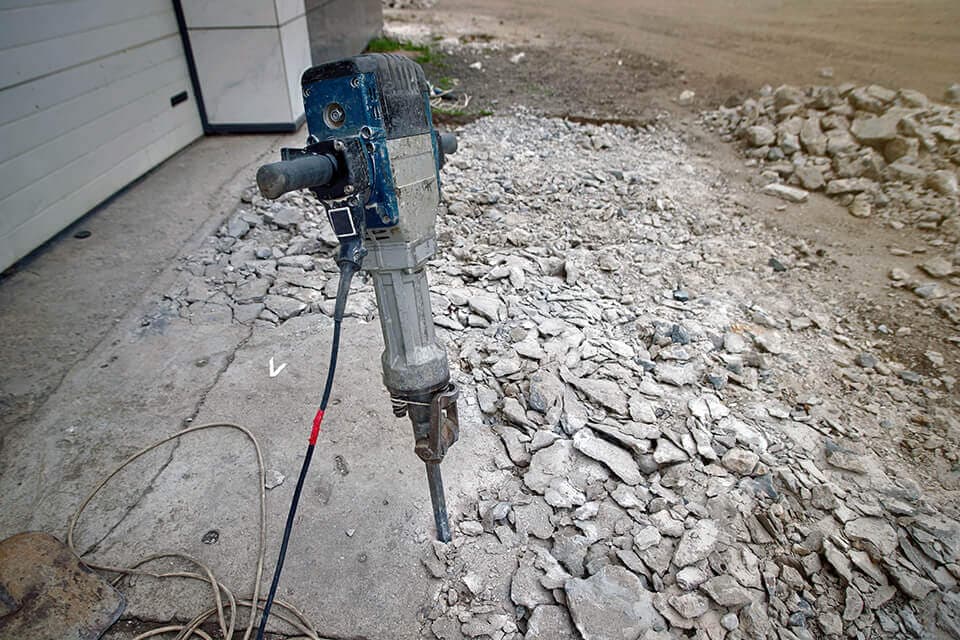
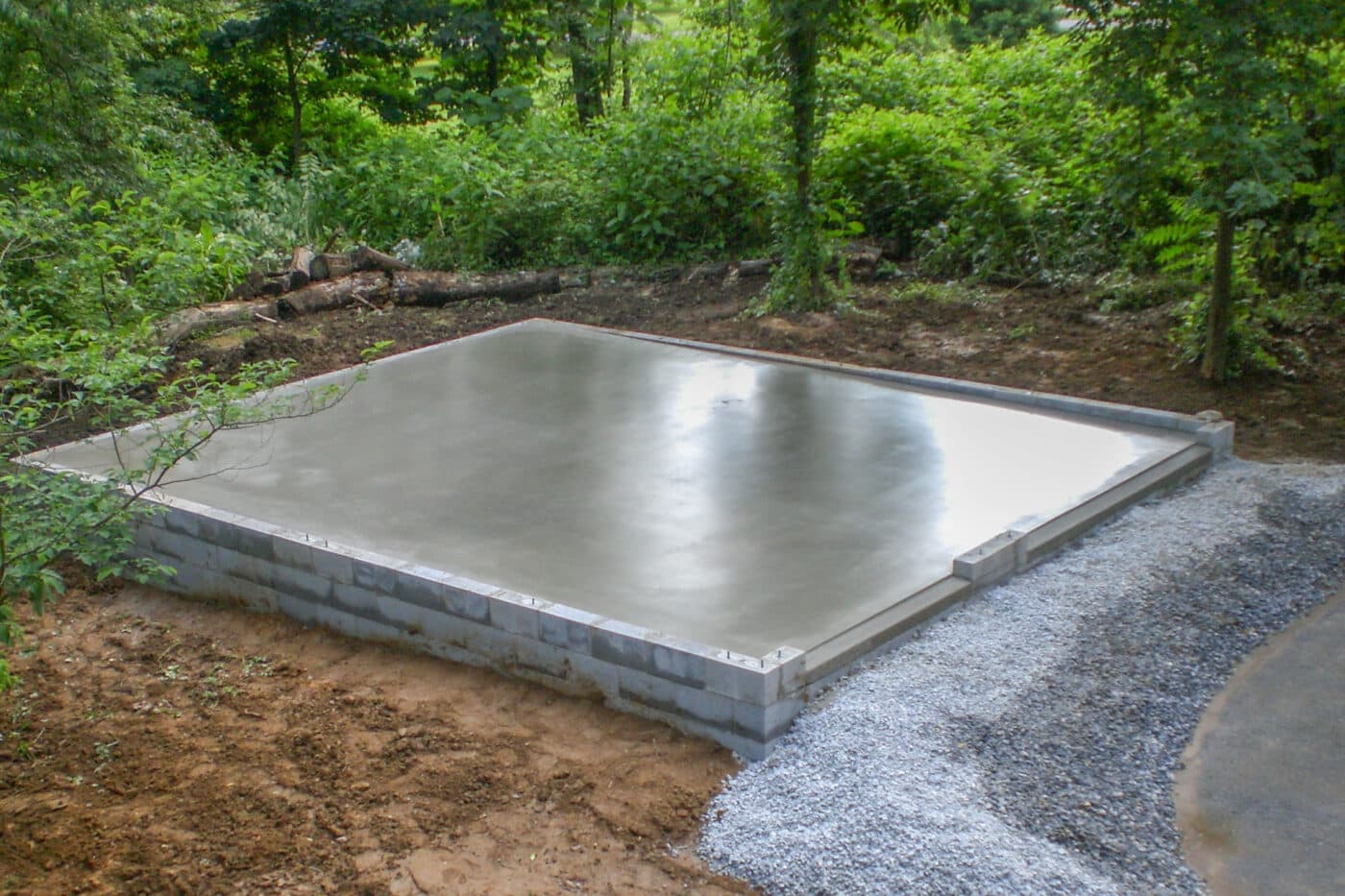
London Concrete Forming installs concrete driveways (new pours, replacements, and widening projects), concrete patios, poured concrete retaining walls, stamped concrete driveway work in 50+ patterns, concrete shed pad installer pads for sheds, garages, and hot tubs, and full concrete removal services when an old slab needs to come out first. If you are unsure which finish suits your project, concrete finishes walks through broom, exposed aggregate, smooth trowel, stamped, and coloured options, and concrete stamps covers the pattern library we rent out and install.
Neighbourhoods we serve in London
We regularly work in Byron, Oakridge, Masonville, Westmount, Old North, Lambeth, Summerside, Hyde Park, White Oaks, and Wortley Village, along with the rest of London. Outside the city, we serve St. Thomas, Woodstock, Stratford, Sarnia, Chatham, and Port Stanley for full concrete services, plus Ingersoll, Tillsonburg, and Aylmer for driveways specifically. There are no travel fees anywhere in our service area - see service areas for the full list.
Why concrete over asphalt or pavers in London's climate
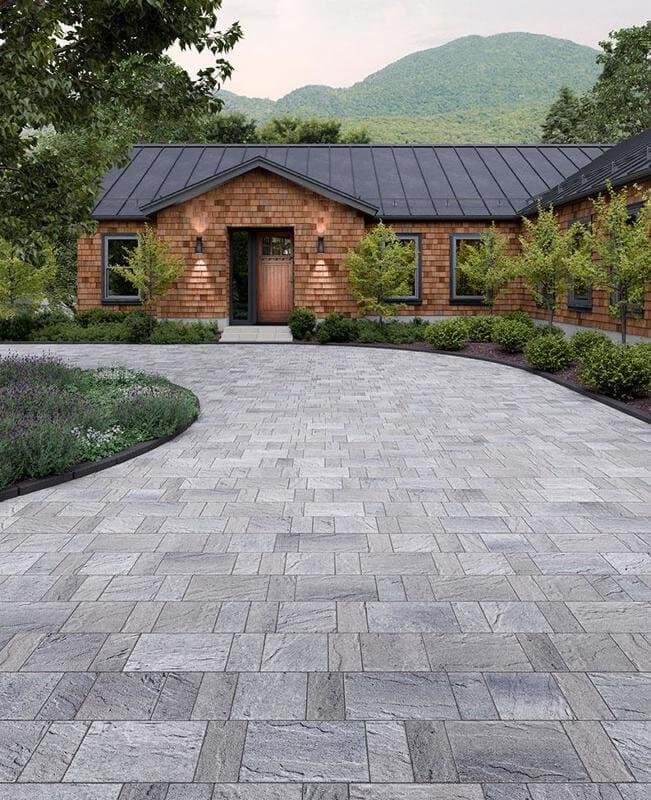
Asphalt softens in summer heat and can rut under a parked vehicle, and it needs periodic sealcoating that concrete does not. Interlocking pavers look good initially but individual stones can shift as London's freeze-thaw cycles push and pull the base underneath them, and road salt applied over winter accelerates that movement at the joints. A properly formed concrete driveway, with reinforcement and control joints placed correctly for our frost depth of roughly 1.2 metres, resists frost heave better and needs far less annual maintenance than either alternative. Concrete also holds up better to the sand and salt tracked onto driveways every winter in this region.
Pricing guidance for London concrete projects
Standard concrete driveway pricing in London runs $10-$16 per square foot, which includes excavation, grading, reinforcement, the pour itself, and a broom finish. Stamped concrete typically runs $15-$25 per square foot because of the added colour hardener, release agent, and stamping labour. Every quote from London Concrete Forming is free and specific to your site - soil conditions, access, drainage needs, and finish choice all factor into the final number, which is why we recommend an on-site visit rather than a phone estimate.
How to choose a concrete contractor in London, Ontario
Ask any London concrete company these questions before signing: What thickness and reinforcement do you use for this application? How do you handle drainage and grading given our clay soil? What is included in the quoted price - excavation, disposal of old material, and cleanup? What is your timeline, and how long before I can use the surface? A contractor who answers clearly and puts the specifics in writing is the one worth hiring. London Concrete Forming has been answering those exact questions for London homeowners for over 20 years, and every quote we provide spells out the process in detail before work begins.
More questions
Do I need to be home during the estimate visit?
It helps but is not required. We measure the area, check grading and drainage, and can discuss finish and colour options over the phone afterward if you cannot be present for the full visit.
Can London Concrete Forming work with an existing landscaping plan?
Yes. We regularly coordinate driveway, patio, and retaining wall placement around existing gardens, fences, and irrigation lines, and we will flag anything that needs to be relocated before excavation starts.
What happens if you find poor soil conditions once excavation starts?
If we uncover unexpected fill, organic material, or standing water during excavation, we stop and discuss options with you before proceeding - this may mean additional excavation depth or a modified granular base, and we will quote any change before continuing.
Do you provide references or examples of past work in my neighbourhood?
Yes. With 500+ completed projects across London and area, we can usually point to recent work near Byron, Masonville, Old North, or wherever you are located, and we are happy to share references on request.