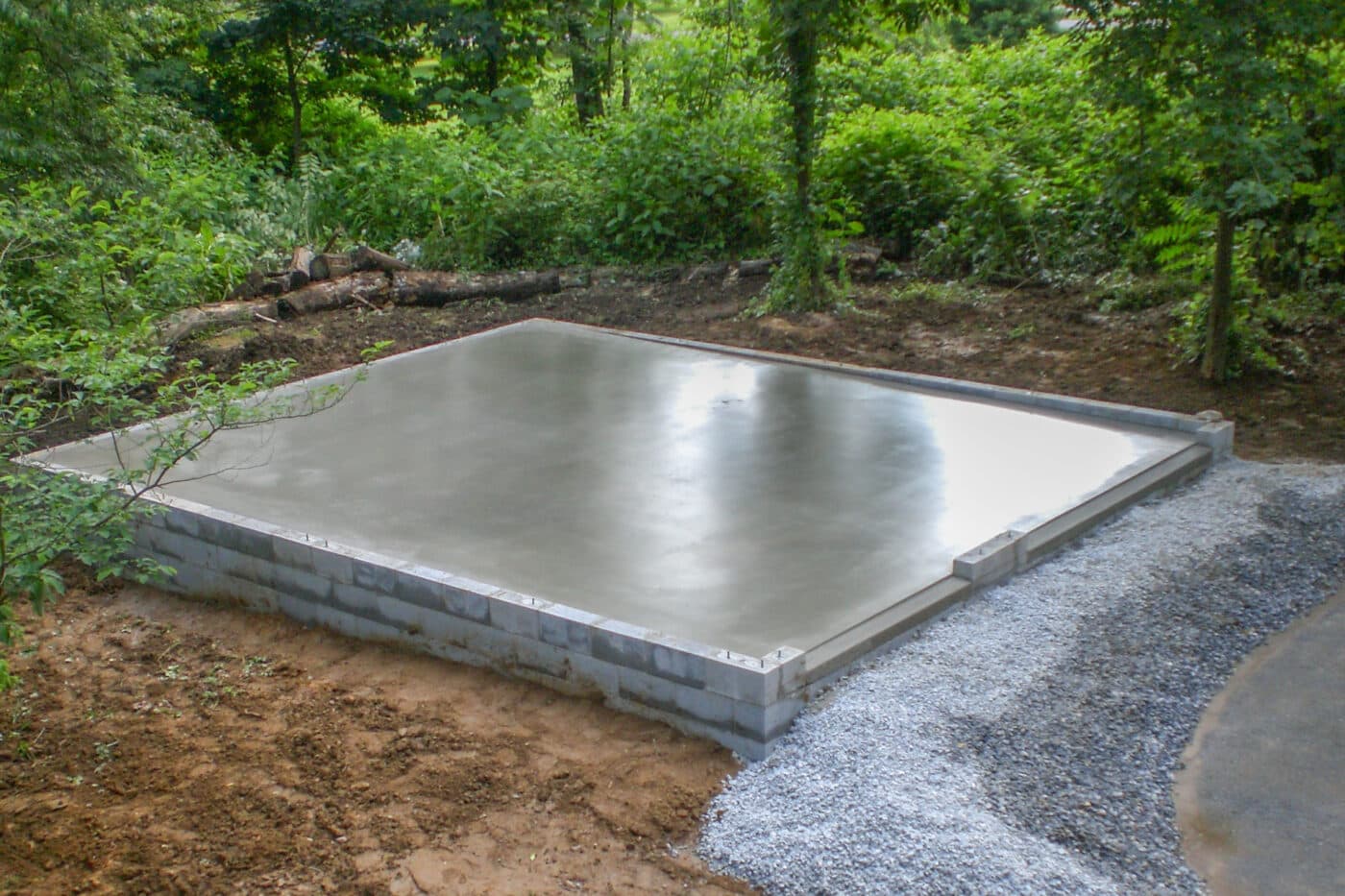
Sizing a concrete pad correctly for a shed, garage, or hot tub
A shed pad and a hot tub pad look similar but carry very different loads, and getting the thickness, reinforcement, and grading wrong is the most common reason a pad settles or cracks under the structure it was meant to support.
Sizing the pad to the structure
We size a pad slightly larger than the footprint of the shed, garage, or hot tub it will support - typically an extra few inches on each side - so the structure's frame or skirting has a clean edge to sit on rather than overhanging bare ground. For a garden shed, this is usually straightforward; for a garage pad or a pad supporting a larger prefabricated building, we confirm the manufacturer's foundation specifications before finalizing pad dimensions.
Thickness by application
For a garden shed or small outbuilding, 4 inches (100mm) of concrete is standard. For larger structures, heavier equipment storage, or a hot tub, we recommend 5-6 inches (125-150mm) with rebar reinforcement, because a filled hot tub weighs considerably more than an empty shed and that load is concentrated rather than spread evenly. Garage pads are treated like a small driveway in terms of thickness and reinforcement since they need to handle vehicle weight.
Anchoring
Sheds and some garage structures are anchored to the pad with embedded anchor bolts or post-installed concrete anchors, positioned according to the structure's frame layout. We coordinate anchor placement with the shed or garage kit's foundation plan before the pour so bolts land exactly where the frame needs them, rather than drilling and patching afterward.
Grading around the pad
A pad needs to be graded so water sheds away from the structure rather than pooling against its base or running toward a neighbouring yard. This matters as much for a small shed pad as it does for a driveway - standing water against a shed's base line accelerates rot and rust on the structure itself, and a poorly graded hot tub pad can direct runoff toward a house foundation if it sits close to the building.
Hot tub pads specifically
Beyond thickness, a hot tub pad needs a perfectly level surface, since even a small pitch can stress the tub's shell or cabinet over time. We check level carefully during the pour and finish, and we confirm access requirements with you in advance since hot tub delivery sometimes needs a clear path that affects where the pad can practically be placed on the lot.
Permits for pads
A permit is generally not required for a shed pad alone, but the shed structure itself may need one if it exceeds 10 square metres under City of London rules. Garage pads typically do require a permit since they support a permanent structure. We advise on the specific requirement for your project during the free consultation rather than leaving you to research it separately.
Cost and timeline
A standard 10x12 concrete shed pad typically costs $1,200-$1,800 installed, including excavation, gravel base, forming, pour, and broom finish. Larger pads and those with difficult site access cost more. Most shed pads are completed in one day - excavation and forming in the morning, pour and finish in the afternoon - and need the usual 7-day cure before the structure is placed, with 28 days to full strength.
More questions
Should I order my shed or hot tub before or after the pad is poured?
We recommend confirming the exact model and its foundation footprint before we pour, since we size the pad to those specifications - ordering after the pour risks a mismatch in anchor points or dimensions.
Can you pour a pad on a sloped section of yard?
Yes, we can excavate and grade a level pad into a sloped yard, though a steeper slope may need additional excavation depth or a short retaining edge, which we quote during the site visit.
Do you pour pads for pool equipment or generators as well?
Yes, small equipment pads follow the same process as a shed pad, sized to the specific unit's footprint and any manufacturer clearance or anchoring requirements.
Can a shed pad be poured in winter in Ontario?
Yes, with cold-weather concrete practices including heated enclosures and insulating blankets, we schedule winter pours during mild spells using winter-grade mixes - contact us for seasonal availability.