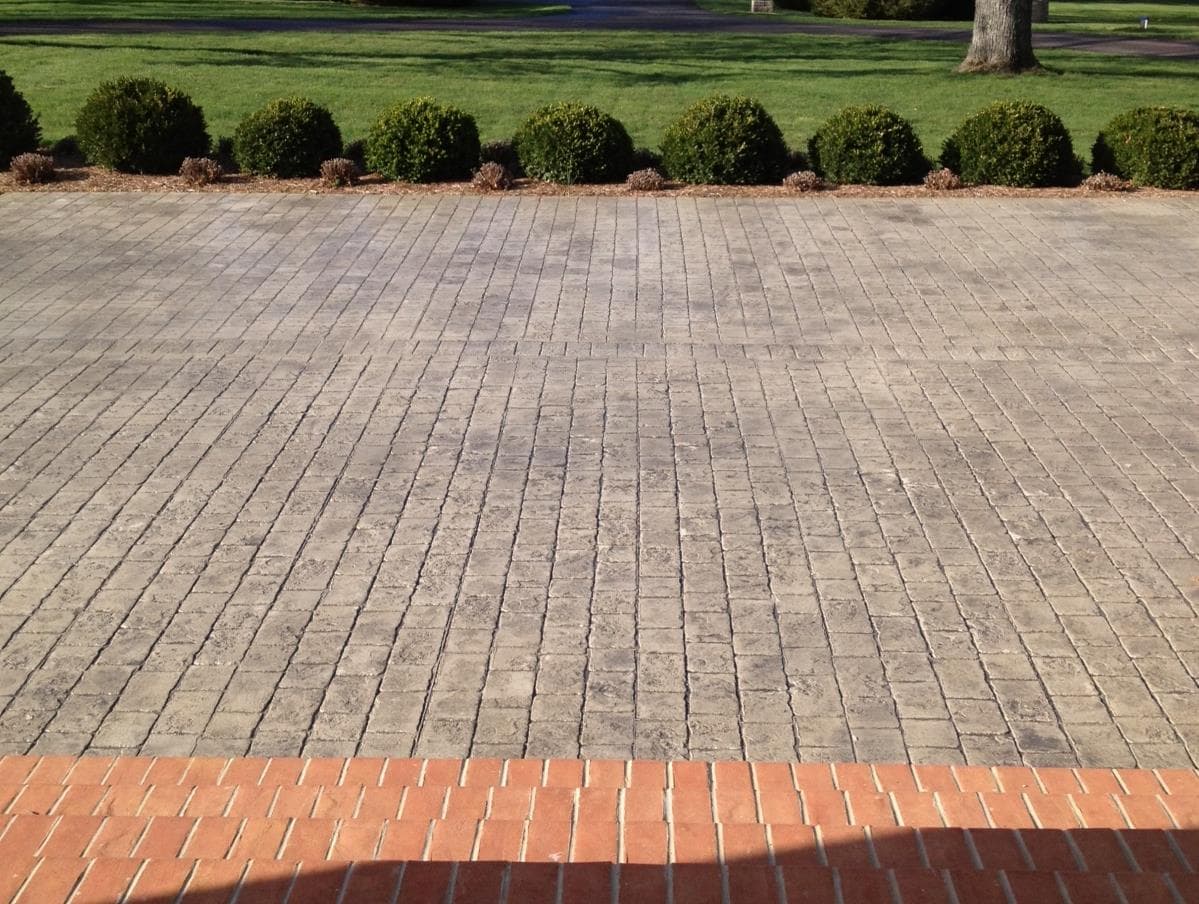
Stamped concrete driveways in London: how the process and cost break down
Stamped concrete gets you the look of natural stone or brick on a driveway at a fraction of the material cost, but the process behind it - colour layering, stamping technique, and sealing - determines whether it looks sharp for 30 years or fades within five.
How colour is built into a stamped driveway
Stamped driveways typically use two layers of colour. Integral colour is mixed into the concrete itself before the pour, giving the base tone that will show through even if the surface wears over decades. A colour hardener is then broadcast onto the surface before stamping, which adds a deeper, richer tone and also increases surface density and abrasion resistance - a meaningful benefit on a driveway that carries vehicle weight and winter salt exposure. A release agent, applied just before the stamp mats go down, prevents the mats from sticking and adds a subtle antiquing effect in the texture lines.
Choosing a pattern for a driveway
We offer 50+ stamped patterns, but not every pattern suits a driveway the way it suits a patio. Cobblestone and ashlar slate are the two most requested driveway patterns because their pattern lines run in directions that hide the tire-wear paths that develop over years of use. Herringbone and running bond brick also work well and add a more formal look. See concrete stamps for the full pattern gallery with photos of each option installed in London.
Sealing schedule and freeze-thaw performance
The concrete itself in a stamped driveway is just as durable as standard broom-finished concrete - it is the sealer on top that needs periodic attention. We recommend resealing every 2-3 years, and this schedule matters more in London than in milder climates because our freeze-thaw cycles and road salt exposure both accelerate sealer breakdown. A worn sealer lets moisture into the surface texture, which then freezes and can cause surface flaking (scaling) at the pattern grout lines. Reapplying sealer on schedule is inexpensive compared to the cost of repairing scaled sections.
Winter traction on stamped driveways
We apply a non-slip additive into the sealer specifically for driveways, and the texture created by the stamp pattern itself provides more grip underfoot and under tires than a smooth trowelled surface. We recommend sand rather than road salt for winter traction where possible, since salt is one of the main contributors to sealer wear and, over many seasons, surface scaling.
Cost range and what drives it
Stamped concrete driveways in London typically run $15-$25 per square foot installed, compared to $10-$16 for standard broom-finished concrete. A typical two-car driveway (500-700 sq.ft.) runs roughly $8,000-$17,000 installed. Pattern complexity, the number of colours used, and driveway size are the main cost drivers - a single-colour cobblestone pattern costs less than a multi-colour ashlar slate design with a hand-applied accent border.
Adding stamped concrete beside existing concrete
If you already have a plain concrete driveway apron or an adjoining walkway, we can often add stamped concrete alongside it - for a driveway extension, a decorative border, or a widened section. We assess the existing slab's condition and age during the estimate to determine whether the new pour can tie in structurally or needs an isolation joint between the old and new concrete.
More questions
Does stamped concrete cost more to repair than plain concrete if it cracks?
Repairing a crack in a stamped pattern takes more care to blend the texture and colour than a plain broom finish, but proper joint placement at the design stage keeps most cracking confined to control joints rather than across the visible pattern.
How long should I wait before sealing a new stamped driveway?
We typically apply the first sealer coat shortly after the concrete has cured enough to accept it, then set you up on a 2-3 year resealing schedule after that to maintain colour and surface protection through London winters.
Can stamped concrete fade in direct sunlight over time?
Integral colour holds up well since it runs through the full depth of the slab, but surface colour hardener can lighten slightly with UV exposure over many years - regular sealing helps slow this fading.
Is stamped concrete a good choice for a driveway apron at the street?
Yes, though we check City of London requirements for driveway aprons and curb cuts first, since some municipal specifications affect thickness or finish requirements right at the street edge.